Best Practices for Japanese SEO
Although it’s not too late for new businesses to gain a share of the Japanese market, it’s important to first learn about Japan’s unique online and business culture. If you have an existing SEO-friendly website in English or another language, it’s possible to manage the launch and optimization of a Japanese site independently. Remember that alongside standard international SEO techniques (hreflang, localized URLs), you must also adhere to best practices unique to the Japanese market.
Japanese Search Engine
If you’re coming from English SEO, the good news is that you probably don’t need to learn a new search engine. Google Japan makes up 70~80% of all searches in Japan, followed by Yahoo and Bing. The main search engines used in Japan are Google and Yahoo. From a Japanese SEO perspective, I recommend simply optimizing for Google, as Yahoo is also powered by Google’s algorithm.
Hosting Server
The first question you might ask yourself is, should you use a Japanese hosting server? There isn’t a definitive answer to this question among SEO professionals, but one thing to keep in mind is that the server location can affect page speed, which of course can affect SEO.
In the past, server location was considered a more important geotargeting signal. Google originally stated that a website’s server IP address could be used as a factor when determining relevance for local search results. As a result, many SEO professionals recommended using Japanese hosting for websites targeting users in Japan.
However, Google later clarified that other signals, such as your domain extension, Search Console settings, website content, and backlinks, are generally more important for determining geographic relevance. In most cases, you do not need to host your website in Japan for SEO purposes. Instead, focus on selecting a hosting solution that provides strong performance, reliability, and fast load times for your Japanese audience.
Top-Level Domain
The best top-level domains for Japanese sites are .co.jp and .jp.
.co.jp is available for companies registered in Japan, so it indicates that the business is legitimate and trustworthy. But if you’re an existing global company with an online presence, you may keep the same corporate site and add a Japanese version, so for example https://www.datachai.com/ja/
If you use a generic top-level domain (.com, .net, .info, etc.) you can use the country targeting tool in Google Search Console to tell Google that you are targeting Japan.
URL Structure
From an SEO perspective it’s fine to use either Japanese characters or Roman alphabets. I would recommend using Roman alphabets though, because it’s easier to share the link via email or social media. URLs that contain Japanese characters could have encoding issues when they are copied and shared.
Google Search Central’s John Mueller has confirmed that you can include Japanese keywords in the URL with Romaji (Roman alphabets to spell Japanese words). For example, https://www.datachai.com/nihongo
SEO Tools
Popular SEO platforms such as ahrefs and SEMrush can be used for Japanese keyword research. While keyword and traffic estimates are generally less precise than they are for English-language markets, the data is usually accurate enough for identifying opportunities, estimating search demand, and conducting competitor research.
In my experience, SEMrush has stronger competitive intelligence and technical SEO data for Japanese websites, while ahrefs often provides more accurate search volumes. As with any SEO tool, it is best to cross-reference data from multiple sources rather than relying on a single platform.
Japan also has several locally developed SEO platforms. One of the most well-known is mieru-ca. While its pricing is generally higher than many international SEO tools, some users prefer it because of its Japanese-language interface, local market focus, and workflow features tailored to Japanese businesses.
Ultimately, no SEO tool provides perfectly accurate search volume or ranking data. Whether you choose ahrefs, SEMrush, mieru-ca or another platform, understand the limitations of the data and use it as a guide rather than an exact measurement.
Keyword Research
The fundamentals of English keyword research generally translate to Japanese, but there are some cultural nuances to be aware of. For example, while English speakers often use “near me" searches (ex. “digital marketing meet up near me", “best ramen near me"), English, the Japanese people tend to search for their actual location (ex. “SEO agency in Tokyo", “cafe in Osaka"). In addition, native Japanese speakers often use abbreviated words, such as konbini for convenience store, sutaba for Starbucks, and DX for digital transformation.
Written Japanese uses a combination of 3 different alphabets (hiragana, katakana, and kanji) so there’s multiple ways of spelling out the same search query. For example, ありがとうございます, 有難うございます, and 有難う御座います can all be read as “arigato gozaimasu" which means thank you in Japanese. Fortunately, Google’s algorithm can usually interpret these different spellings as synonymous. So while there’s no need to go overkill and list out every spelling variation in the page title or meta description, it may help to use a natural blend of the 2 or 3 most common spellings throughout the body text.
Page Title
Google counts pixel length, not characters. Regardless of the language, the maximum title length is 560px, and meta description is 990px. You may know that for English, that’s approximately 60 characters for the title and 160 characters for the meta description.
Japanese full-width characters are 20 pixels, so the recommended maximum title length would be 28 characters, and meta description would be 49.5 characters, if everything is in Japanese. However, Japanese websites sometimes mix in English words like brand names and loanwords, creating a combination of full and half-width characters that makes manual counting a hassle. In any case, this SEO Meta Tag Length Checker tool makes it easy to check the display length.
Japanese Localization
English proficiency in Japan is not as widespread as in other major economies. All business in Japan is done in Japanese. Simply translating your website is insufficient; you must build trust through genuine localization. Japanese consumers place a high value on credibility and commitment to the Japan market, and one way to demonstrate this is through perfect Japanese localization.
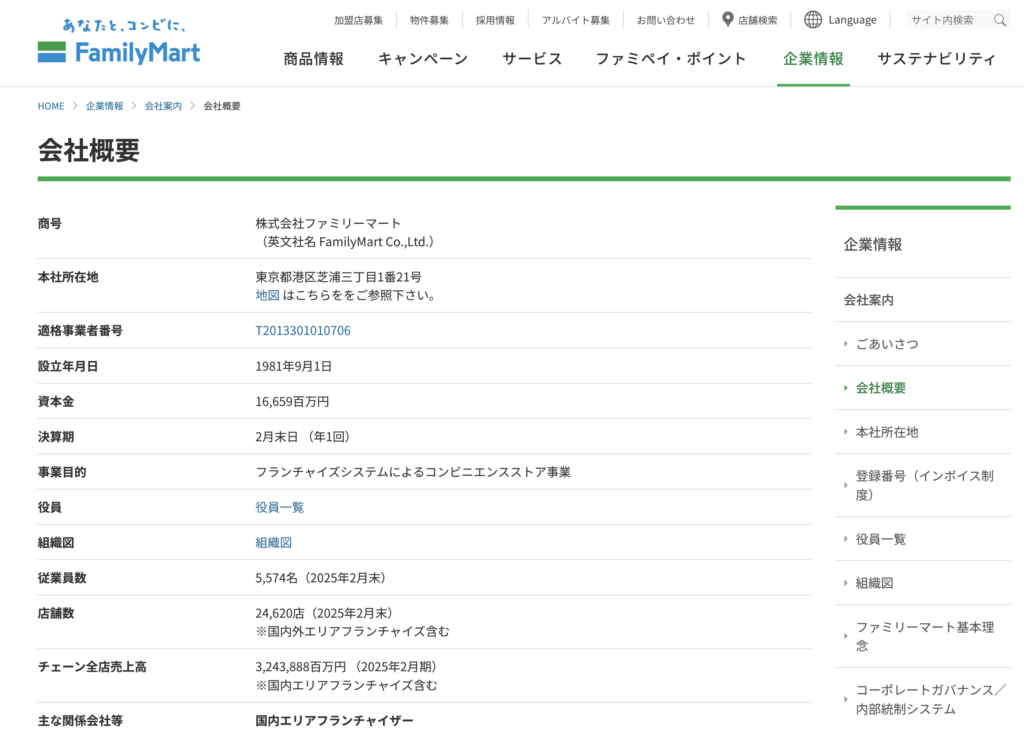
For example, the company page (kaisha gaiyou) is fundamental and should be adapted to local expectations. See the screenshot of Family Mart’s company page above. Instead of values and mission statement, it includes foundational information like the establishment date, corporate address, and capital stock.
Web Design
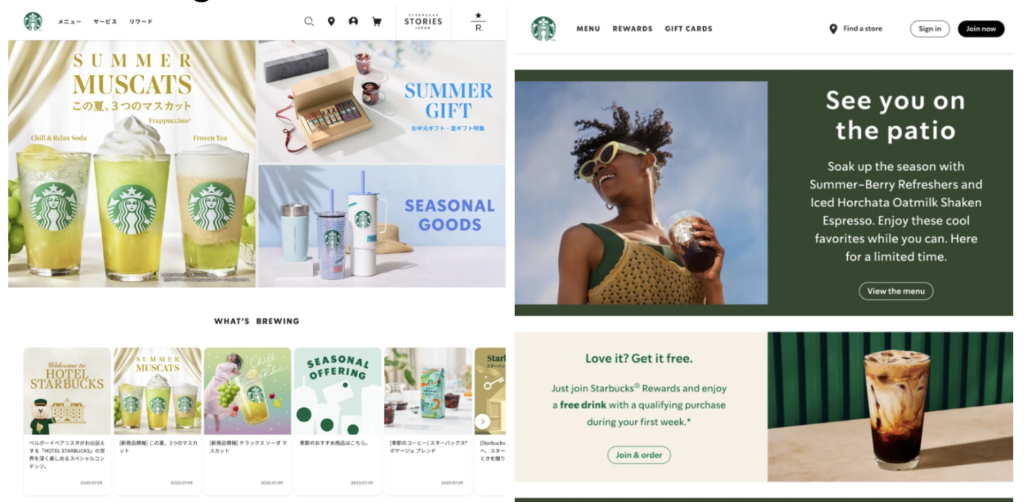
You’ll immediately notice that the Japanese (left) and American (right) websites of Starbucks have a totally different look and feel. Traditionally, local Japanese websites have displayed as much information as possible on the homepage. However, more and more web developers nowadays are favoring simplistic and minimalist designs. This trend is especially growing among younger generations.
Link Building
If you have extensive resources or connections in digital PR, you may try link building through feature articles or interviews in online media. Cold outreach for backlink exchanges isn’t a common practice, so your efforts may not pay off as much as they did for English-speaking markets. Otherwise, try blogging platforms. At the time of writing, links from note, Qiita, and Wantedly count as dofollow.
—
Japanese business culture has traditionally valued in-person and phone interactions, and in some industries, it’s still uncommon for companies to have sophisticated digital marketing teams. So there’s a chance for foreign companies to swoop in and perhaps even get an advantage over the local competition for Japanese SEO.
Although English and Japanese SEO share some similarities, Japanese SEO requires knowing the local nuances to implement it effectively. Finding the right keywords can be especially tricky, due to the Japanese language having 3 different alphabets, along with unique abbreviations and slang.
As a native born and raised in Japan, I have supported numerous businesses with their Japanese SEO strategies, from keyword research to website development. If you are looking to enter the Japan market and require a local expert, check out my Japanese SEO services and feel free to reach out to me.