PyCon HK 2026: Event Report
Today, I was fortunate enough to attend my 3rd PyCon HK in a row. PyCon HK has been held at a different location each year since I started attending, and this year it was at the Hong Kong Institute of Information Technology in Tseung Kwan O, just a few minutes walk from Tiu Keng Leng MTR station.
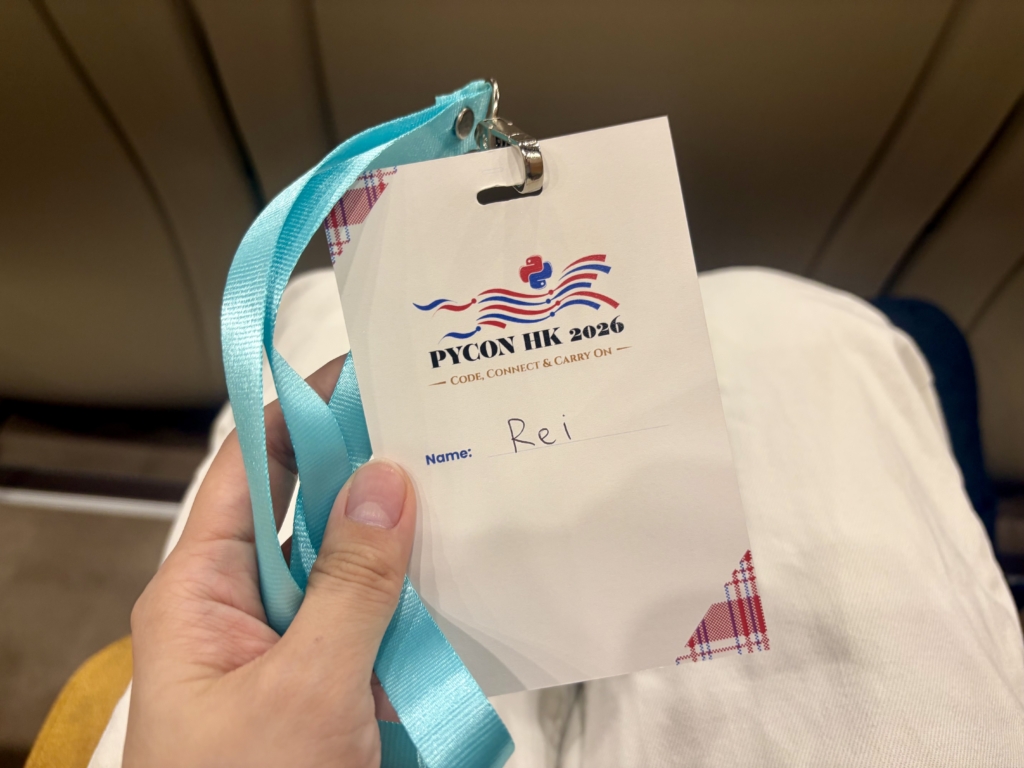
The Venue
There was also a shopping mall nearby, which made it convenient to grab a coffee or lunch. Overall, the venue wasn’t bad, but I personally preferred the university campuses used in the previous 2 years. This year’s venue felt more fragmented, with the auditorium, lecture halls, and sponsor booths spread across different areas. They really weren’t that far apart at all, but the layout didn’t flow well and felt awkward to navigate.
Keynote
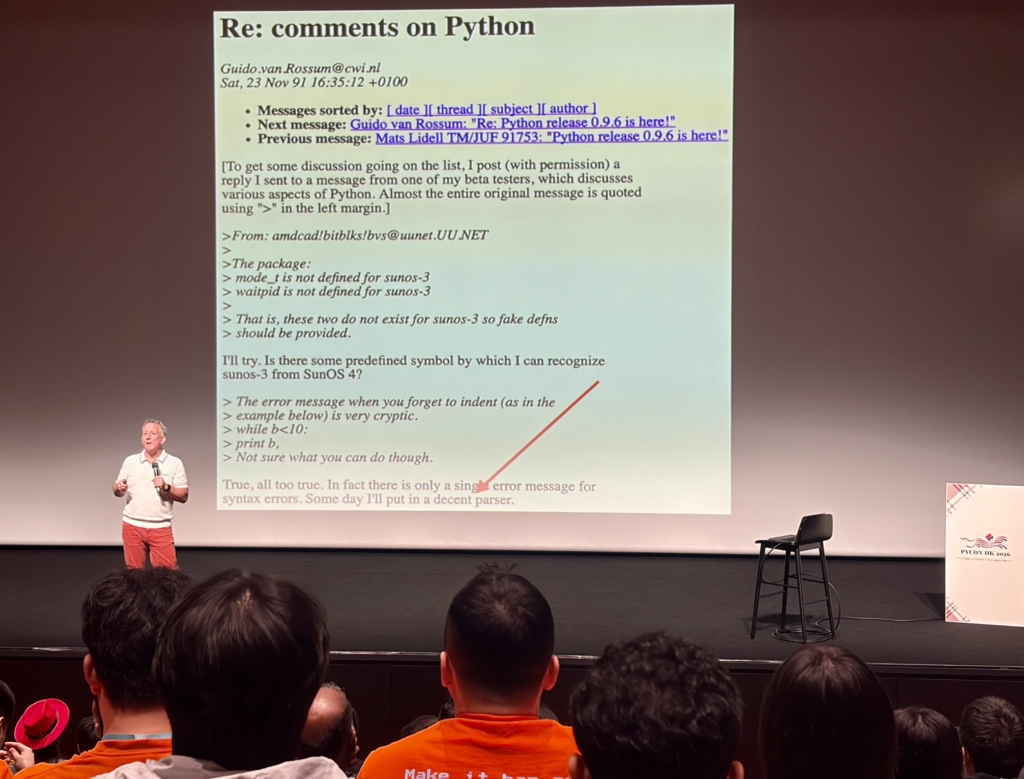
I arrived just before 11am, halfway through the keynote: “Was, Is, Will Be: Python History, Software Engineering, And AI Our Way.” Paul Everitt talked about python’s early community since 1994 til now, with plenty of jokes sprinkled throughout. I’m usually more focused on the code itself than on python’s community or history, so this was a refreshingly new perspective. I didn’t even know that Google was first written in Python, and I will definitely be watching the Python documentary later this weekend.
Interesting Talks
I was only able to attend up until the lunch break, so I certainly missed a bunch of interesting talks. The following ones I saw live and can highly recommend to watch when the recording will be available on YouTube.
Lakebase: Rethinking Serverless Postgres for AI Agents and Python Developers
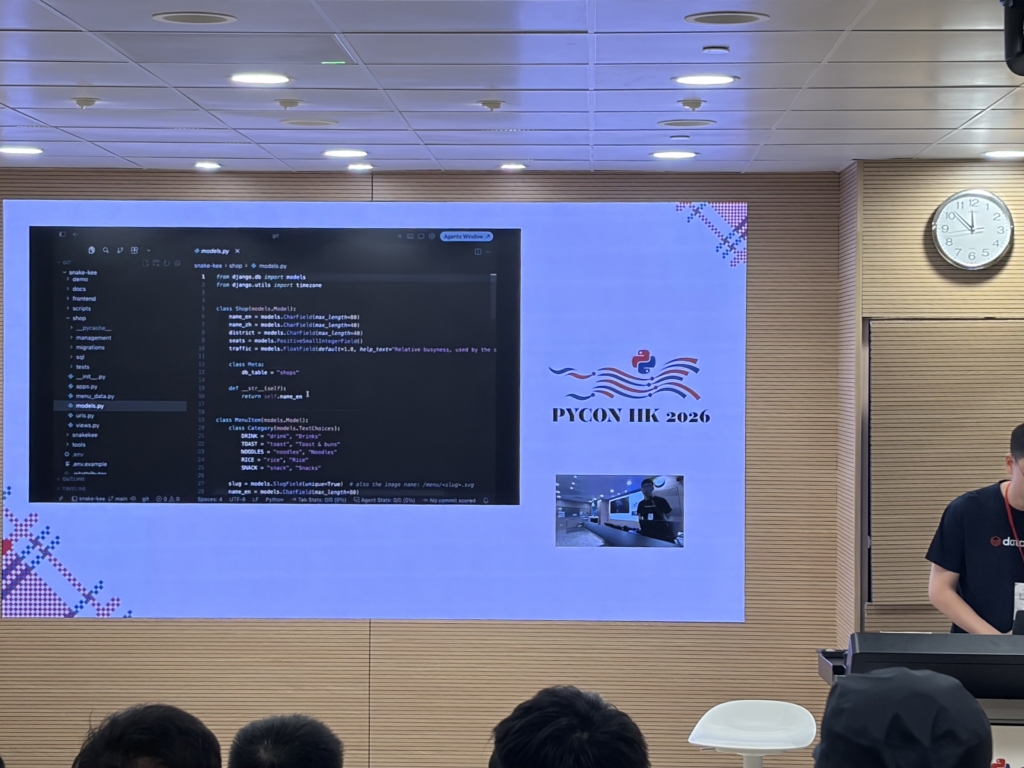
Thanks to coding agents, we can now write code much faster, but testing and development are the new bottleneck. In this talk, we got to see how to use Lakebase, a serverless Postgres from Databricks, to branch and test new workflows on real data. I found this to be a very practical talk, and I could easily see myself applying this kind of approach in client projects. We also got a demo of testing Django migrations on Lakebase branches of production. The scenario was a food ordering app, where a new workflow was introduced to enforce a 1:1 relationship between email addresses and customers, preventing the same customer from creating multiple accounts with the same email address.
Building Agentic AI with Python: From Education to Quantitative Finance
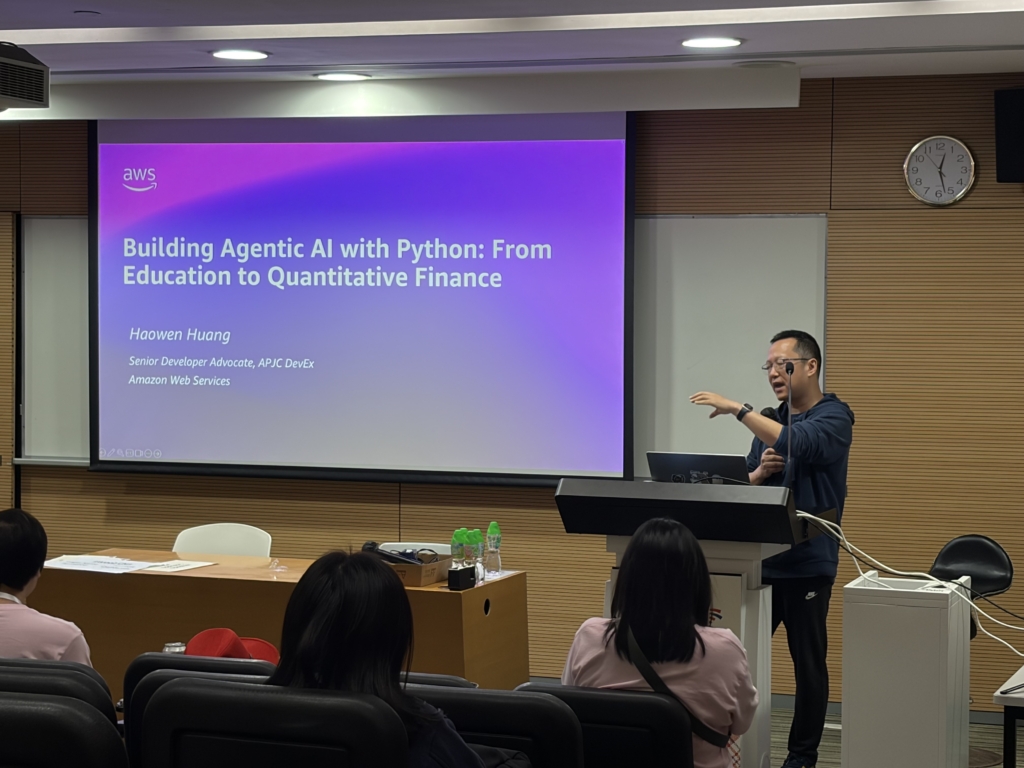
This talk explored how to build a multi-agent architecture in Python using the Strands Agents SDK. I’m interested in trying this hands-on workshop, where you build a multi agent AI system for quantitative trading on AWS. Quant trading probably isn’t my thing, but I have been thinking about how to build my own AI agent for my freelance business, hopefully without paying a premium for enterprise subscriptions.
Why We Still Translate Python Docs in the AI Era (Translating Beyond Words into Engineering Language)
In the era of AI and machine translation, Python documentation still requires human review. Even small words like “unless," “may not," and “only if" can have a significant impact on the meaning of a sentence. If these nuances aren’t translated accurately, they can lead to serious misunderstandings within the python community.
—
Although I only had a few hours, I had a great time. After over a year of freelancing, it was good to engage with the community and learn about new things that I hadn’t been exposed to before. I’m still very much a beginner when it comes to python, and this event was another reminder of just how much there is still to learn. I absolutely look forward to showing up again next year, and would even be interested in volunteering on-site.